
Storage and handling
Capsule moisture, storage, and shelf life. What humidity does to gelatin and HPMC
Understand how temperature and humidity affect gelatin and HPMC capsules, with practical guidance on storage, opened cartons, and shelf life.
Written by A. Sanderson, CEO, Capsules.com

On this page
The same lot of capsules can run clean in September and split at the separation block in January, and the capsules didn't change. The room did. Every hard capsule is a thin film of gelatin or HPMC (hydroxypropyl methylcellulose, the plant-derived material in vegetarian capsules) with water built into it, and that water moves in and out of the shell until the shell agrees with the air around it. Too dry and the shell cracks. Too damp and the shell softens, sticks, and dents. Storage is a humidity problem first and a temperature problem second, and most of what goes wrong with capsules in a warehouse or on a line comes back to those two numbers.
So here's our position, and the working follows. Keep empty capsules sealed in the bag they came in, at 15 to 25 °C (59 to 77 °F) and 35 to 65% relative humidity, and both materials will meet their specification for five years. Open the bag and the clock changes. An opened carton belongs to the room it's standing in, and within a day or two the capsules will have taken on whatever the room has to give. The storage window checker on this page tells you where your room sits, and the AI prompt pack at the foot of the page turns the answer into a storage specification and the records your quality system needs.
- What are the storage conditions for empty capsules? The window for each material, and the checker.
- What's the shelf life of empty capsules? Five years, sealed. What the number depends on.
- How much water is in a capsule, and why does the number matter? 13 to 16% against 4 to 7%, and what a carton of capsules weighs in water.
- What happens to capsules in a dry room? Brittleness, the thresholds, and why January is the dangerous month.
- What happens to capsules in a humid room? Softening, sticking, denting, and gelatin cross-linking.
- How fast do capsules take up or lose moisture? Hours to a couple of days, with the published curves.
- Can I store capsules in a fridge, or in a hot warehouse? No, and not above 30 °C for long.
- How should I store an opened carton? Reseal the liner, keep it off the floor, and what to do line-side.
- Will the capsule dry out my powder, or the powder dry out the capsule? Both happen. The 2% rule.
- Why does my fill weight drift when nothing changed? The shell weight moves with moisture, and it shows up in your checks.
- Does the finished product need a desiccant or foil? The short version, and what the stability study is for.
- What does the auditor expect me to record? 21 CFR 111 and 211, EU GMP, BRCGS, ISO 22000, ISO 9001.
- How do I tell if a lot has been damaged? The checks on receipt, and what to ask the supplier for.
- The free AI prompt pack. Load it into ChatGPT, Claude, or Gemini, describe your warehouse and your filling room, and it writes your storage specification, your seasonal risk, and the records for your quality system.
One note before the numbers. The figures on this page are published by the major capsule makers and in the pharmaceutical literature, and we say where each came from. Our own moisture uptake curves and loss-on-drying data for the capsules we sell, measured the same way for both materials with the method stated, will replace them here when the bench work is done.
What are the storage conditions for empty capsules?
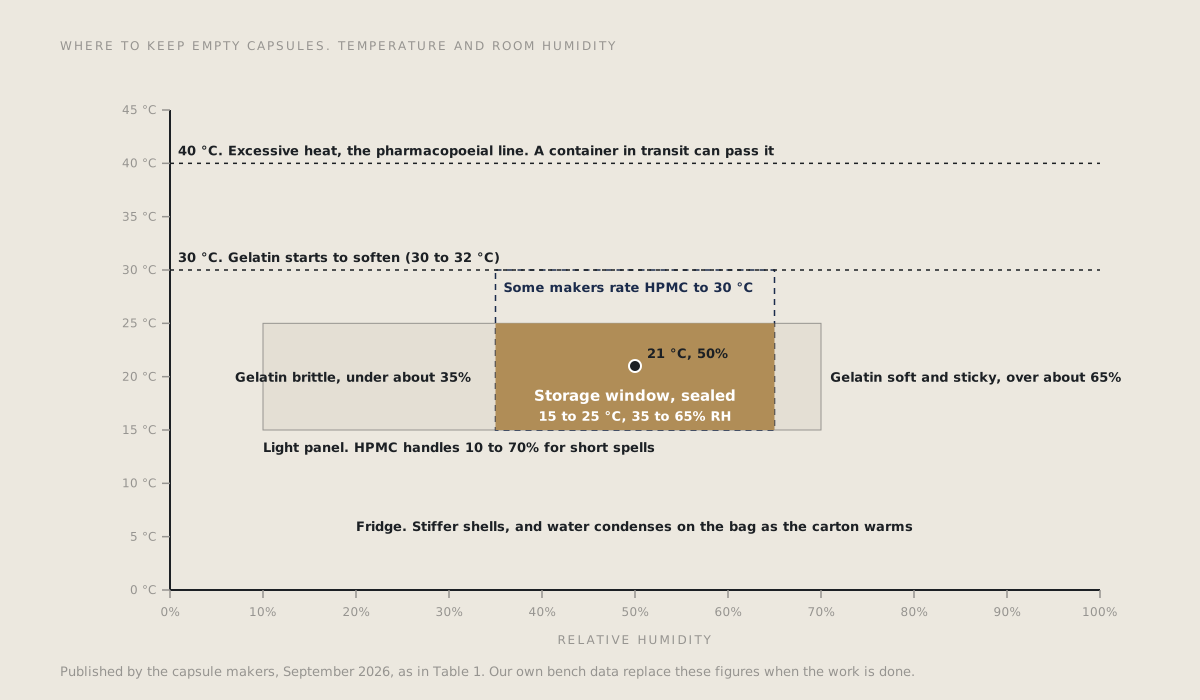
Sealed in the original liner bag, at 15 to 25 °C (59 to 77 °F) and 35 to 65% relative humidity, for both gelatin and HPMC. That's the window the major makers publish, and the one printed on the carton label. Lonza gives 50% RH at 21 °C (70 °F) as the ideal point inside the window, which is a useful target if you have control over the room.
Table 1. Storage window by material. Published by the makers, September 2026. The working window is where the material still handles and runs; the storage window is where you keep it for years.
| Gelatin | HPMC | |
|---|---|---|
| Storage temperature | 15 to 25 °C (59 to 77 °F) | 15 to 25 °C. Some makers rate HPMC to 30 °C (86 °F) |
| Storage humidity | 35 to 65% RH | 35 to 65% RH |
| Working window, short exposure | About 35 to 65% RH. Narrow | 10 to 70% RH. Wide |
| Ideal point | 21 °C, 50% RH | 21 °C, 50% RH |
| Below the window | Brittle. Splits and cracks | Stays flexible, builds static |
| Above the window | Soft, sticky, dents, cross-links | Soft and sticky, later than gelatin |
| Packaging | Heat-sealed polyethylene liner inside a corrugated carton | Same |
Swipe across to see every column.
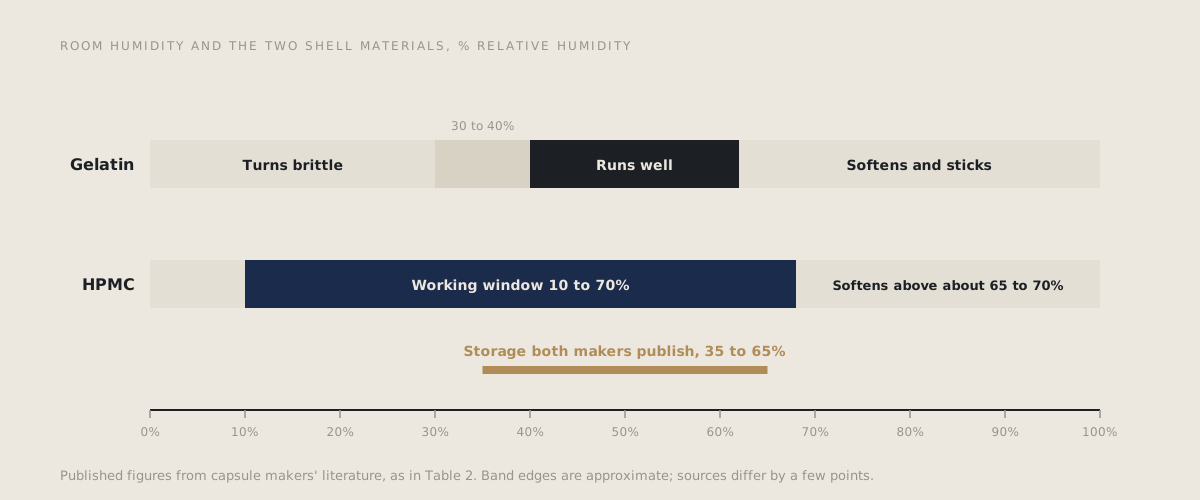
The two materials share a storage window and differ in what happens when you leave it. Gelatin's window is a cliff on both sides. HPMC's is a slope, and a gentle one on the dry side. If you run one room for both materials, run the room for the gelatin.
Storage window checker. Enter your room's temperature and relative humidity and the checker shows where you sit against the gelatin window and the HPMC window and what to do about it. If you only know the weather outside and the thermostat setting inside, use the second tab. The checker works out what your heating or air conditioning is doing to the humidity, which is the number most people don't have.
What's the shelf life of empty capsules?
Five years from the date of manufacture, in the sealed original packaging, stored inside the window above. That's the shelf life on the certificate of analysis for the capsules we sell, in both materials, and it matches what Lonza, Qualicaps, and CapsCanada publish for theirs. Some makers, including several in China, print three years instead. The material isn't different. The maker has chosen a shorter claim, usually because that's how long their stability data runs.
Shelf life is a conditional number. The five years assume the liner bag is still sealed and the carton has spent its life between 15 and 25 °C and 35 and 65% RH. Break either condition and the number no longer applies, though the capsules aren't necessarily spoiled. An opened bag in a good room will be fine for months. An opened bag on a pallet next to a loading door in a British winter can be brittle in a week.
Table 2. Shelf life statements by maker. Sealed original packaging, recommended storage. Published, September 2026.
| Source | Gelatin | HPMC | Note |
|---|---|---|---|
| Capsules.com | 5 years | 5 years | On the certificate of analysis for every lot |
| Lonza (Capsugel) | 5 years | Stability data past 5 years at 25 °C and 65% RH | 3 years stated for the Chinese market |
| Qualicaps | 5 years | 5 years | Extra-dry HPMC grade, 18 months |
| CapsCanada | 5 years | 5 years | |
| Several Chinese makers | 3 years | 3 years | Same materials, shorter claim |
Swipe across to see every column.
The makers test moisture content, dimensions, and disintegration over the period, and report that properly stored capsules hold all three. So the five years is a physical claim about the shell, and a strong one. It isn't a microbial claim in the way a food shelf life is, because a dry capsule at 4 to 16% water doesn't support growth, and it isn't a claim about anything you put inside the capsule. Your finished product's shelf life is a separate study, and we come to that further down.
None of the makers we checked publishes what to do with capsules past the date. In practice a quality manager treats the date as a retest point rather than a bin date. Pull a sample, check loss on drying against the specification, run a brittleness check and a disintegration test, and if the lot passes, extend it in writing with the evidence attached. If you'd rather not carry that risk, order in quantities you'll use within a year or two, which for most lines is the natural rhythm anyway.
How much water is in a capsule, and why does the number matter?
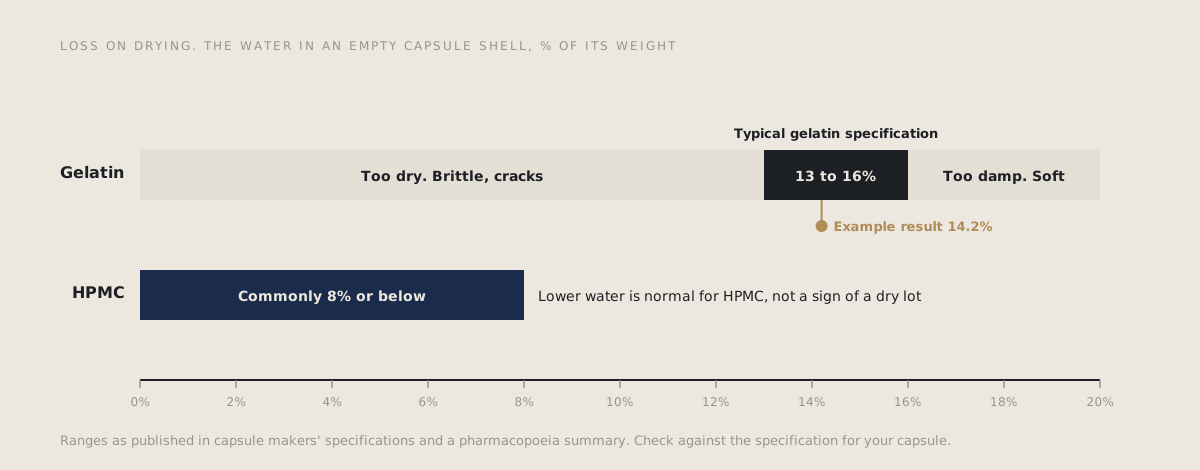
A gelatin capsule leaves the factory holding 13 to 16% water by weight, and an HPMC capsule about 4 to 7%. Both numbers are on the certificate of analysis as loss on drying, and both are the single most useful figure on the certificate for anyone storing or running capsules, because the water is where the trouble starts and ends.
In gelatin the water is structural. Gelatin is a protein, and the water sits between the protein chains and lets them slide. Take the water out and the film stops flexing and starts cracking. The makers converge on 13 to 16% because that's the band where the film is strong and still flexible, and every maker we checked publishes the same band, which is rare agreement in this trade. HPMC is a cellulose polymer with no such dependence. The water in an HPMC shell is more of a passenger, and the shell keeps its flexibility with almost none of it. HPMC makers disagree more with each other on the number. Lonza states 6 to 7% for its thermogelation capsule, Qualicaps 4 to 6%, ACG 3 to 8%, and Qualicaps sells an extra-dry grade at 2 to 3.5% for fills that can't tolerate even that. Ask which type of HPMC you're buying and what the moisture specification is, because the answer changes what the shell does against a hygroscopic fill.
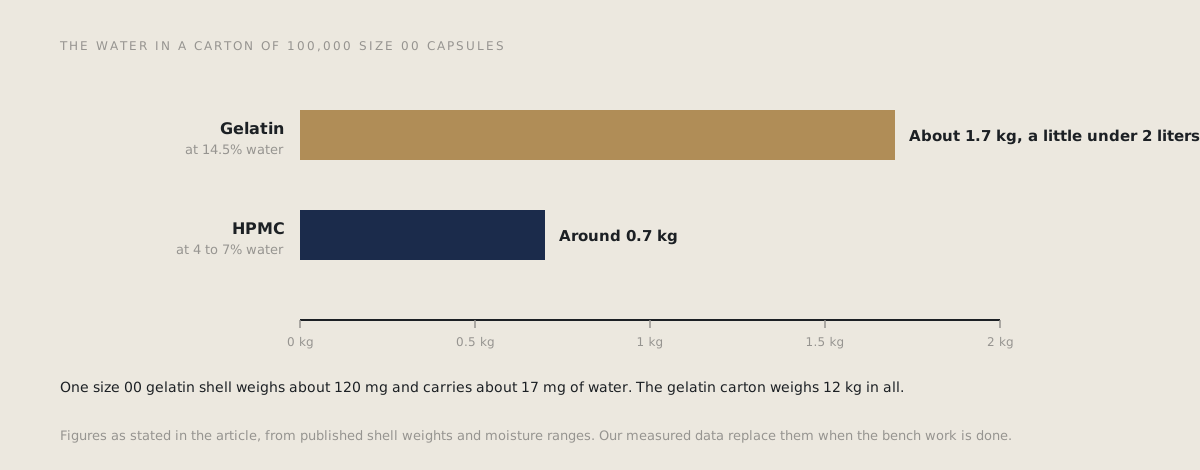
A size 0 gelatin shell weighs about 100 mg, so at 14.5% moisture each shell carries about 14 mg of water. A carton of 100,000 size 0 gelatin capsules holds about 1.4 kg of water, close to a liter and a half, in about 10 kg of capsules. The same carton of HPMC holds around 0.5 kg. That's the water that moves when the room changes, and it's why a carton takes days rather than minutes to settle in a new room.
Table 3. Water content and the thresholds that matter. Published figures from the makers and the literature. Loss on drying is the test on the certificate; equilibrium moisture is what the shell settles to in a given room.
| Gelatin | HPMC | |
|---|---|---|
| Water content as made, loss on drying | 13 to 16% | 4 to 7%, by maker. Extra-dry grades 2 to 3.5% |
| Where flexibility starts to go | Below about 13% | Below about 3% |
| Where most shells break on handling | Below about 10% | Not reached in the published tests. Undamaged at 2% |
| Where the shell softens and deforms | Above about 16 to 18% | Higher. The film holds up further into the damp |
| Room that produces the dry threshold | Roughly under 35% RH, held for days | Roughly under 10% RH |
| Room that produces the damp threshold | Roughly over 65% RH, held for days | Roughly over 70% RH |
| Static charge | Builds below about 35% RH | Builds below about 35% RH, and HPMC holds a charge longer |
Swipe across to see every column.
The loss-on-drying figure on a certificate of analysis is a snapshot taken at the factory, in the factory's room. Between there and your line the capsules have been in a container, a warehouse, and your goods-in area, sealed in a bag that slows the exchange but doesn't stop it over months. Our own measured data for the lots we ship will go here once the bench work is done. Until then, treat the certificate as the starting point and your room as the thing that decides where the capsules end up.
What happens to capsules in a dry room?
Gelatin capsules go brittle, and they do it in the sequence the operator sees on the line. Bodies split at the separation block, caps crack under the closing station, and the reject bin fills with capsules that were fine last month. HPMC capsules stay flexible in the same room and build static instead.
The published thresholds are consistent. A Capsugel study of 42 production batches put the point where gelatin starts to lose flexibility at 13% loss on drying, the bottom of the specification. A 1989 study found empty gelatin capsules brittle once the room fell under 40% RH for long enough to equilibrate, and the makers' own working window bottoms out at 35%. Below 10% water the published breakage rate on handling approaches 100%. HPMC in the same tests stayed intact at 2% water, and one maker publishes a breakage test at 12% RH in which its HPMC capsule came through markedly better than gelatin.
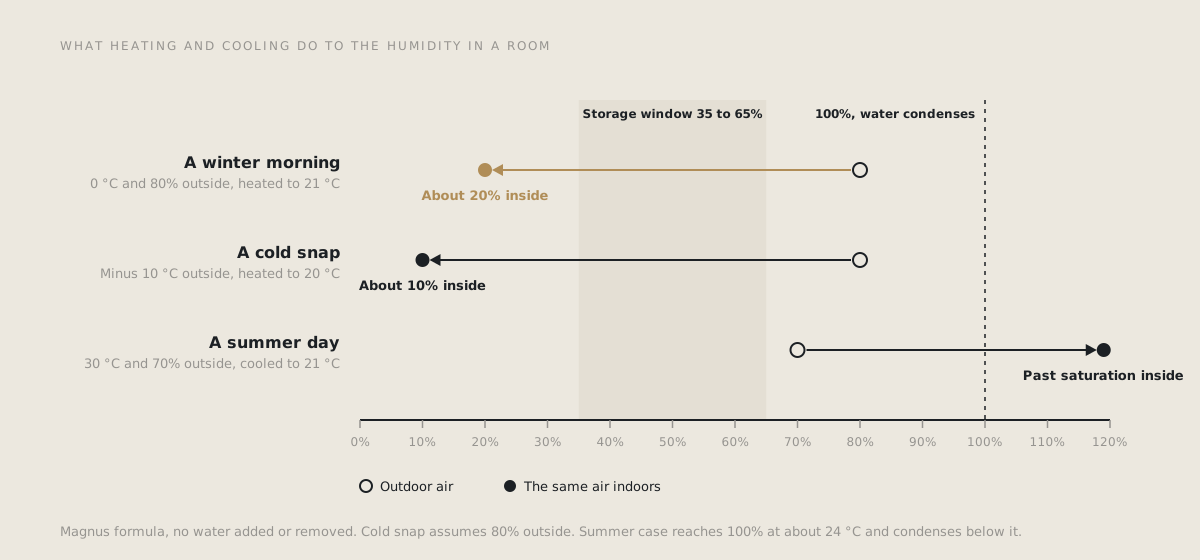
January is the month, at least in the northern half of the US and in the UK, and the reason is the heating rather than the weather. Cold air holds very little water. Take outdoor air at 0 °C and 80% humidity, a normal winter morning, and heat it to 21 °C without adding any water, and the relative humidity drops to about 20%. At minus 10 °C outside, heated to 20 °C inside, the room is at about 10%. Nothing on the line changed, the humidity gauge on the wall may not even be there, and the gelatin capsules that ran clean in the autumn are now standing in a room at about the humidity of a desert afternoon. A filling room with a humidifier and a gauge is a cheap fix compared with a stopped line, and the checker on this page will tell you whether you need one. The room conditions for running, as opposed to storing, are covered with brittle and cracked shells and the other line faults.
Static is the dry room's other problem, and it hits both materials. Under about 35% RH capsules pick up charge as they tumble through the hopper, stick to each other and to the bowl, and refuse to orient. HPMC holds its charge longer than gelatin. The fix is the same as for brittleness, which is to bring the room up to 40 or 50% RH, with ionizing bars on the machine as the second line.
What happens to capsules in a humid room?
The capsules soften. Gelatin takes on water above about 65% RH and the film loses stiffness, so capsules stick to each other in the bag, deform in the hopper, and dent at the closing station because the cap no longer holds its shape under load. HPMC does the same a little later, somewhere above 70%. A shell that has been damp and is dried back may keep the deformation. A shell that has been dry and is brought back into the window usually recovers.
Gelatin has a second, slower problem in damp heat that HPMC doesn't share. Gelatin cross-links. Given warmth, humidity, and a trace of an aldehyde, the protein chains bond to each other, and a cross-linked shell no longer dissolves the way it should. The published test condition is 40 °C and 75% RH, the accelerated stability condition, and three months of it can drop a gelatin capsule's dissolution below the pharmacopoeial limit. The reaction peaks around 60 to 70% humidity, and once it has started it carries on after the cause is removed. The aldehyde can come from inside the fill (corn starch, polyethylene glycols, some sugars, and many botanical extracts release them) or from the storage room. It's the reason a pharmacopoeial dissolution test for gelatin capsules has a second tier with enzymes in the bath. HPMC has no free amine groups for an aldehyde to react with, and the makers state plainly that HPMC isn't affected. For a gelatin product with a long shelf life, the damp end of the window matters more than the dry end, because brittleness is visible and reversible and cross-linking is neither. The chemistry of the two materials, including how gelatin cross-linking slows dissolution, and where each one fits, is worked through in full elsewhere.
Air conditioning can put a room over the window as easily as heating puts it under. Cooling 30 °C air at 70% humidity down to 21 °C without dehumidifying pushes it past saturation, which is why a summer filling room with a cheap split unit sweats on the walls. The second tab on the checker handles that case too.
How fast do capsules take up or lose moisture?
Hours to a couple of days for a capsule in the open, and weeks to months for a sealed carton. A 2025 study exposed empty shells to 25 °C and 75% RH and weighed them as they went. Gelatin shells gained 0.8% of their weight in the first half hour, 1.1% in an hour, and 3.8% in a day. HPMC shells gained 2.3% in half an hour, 4.2% in an hour, and 5.5% in a day. A second study found gelatin, HPMC, and pullulan shells all at equilibrium after 48 hours. Lonza's own comparison, a week at room temperature across a range of humidities, shows HPMC settling at about a third of gelatin's moisture content at each humidity tested.
Table 4. Weight gain of empty shells moved from a normal room into 25 °C and 75% RH. Published, 2025. The study tested capsule shells made for inhalation products. Percent of starting weight. Gelatin started at about 14.7% water, HPMC at about 4%.
| Time in the damp room | Gelatin | HPMC |
|---|---|---|
| 30 minutes | +0.8% | +2.3% |
| 1 hour | +1.1% | +4.2% |
| 24 hours | +3.8% | +5.5% |
| Equilibrium (published elsewhere) | About 48 hours | About 48 hours |
Swipe across to see every column.
HPMC moves faster than gelatin, in both directions, because the cellulose film is more permeable to water vapor. And gelatin ends up holding more, because the protein binds water in a way cellulose doesn't. So HPMC drifts sooner and matters less, and gelatin drifts later and matters more.
The practical rule that falls out of those numbers is that an opened liner bag belongs to the room it's in by the end of the shift. A sealed bag doesn't. Polyethylene slows water vapor but doesn't stop it, and over a container voyage or a season in a warehouse a sealed carton will move a little toward the room around it, which is why the storage window applies to sealed cartons and isn't only about open ones. The bag buys you months. The room decides where you end up.
Can I store capsules in a fridge, or in a hot warehouse?
Don't refrigerate empty capsules, and don't leave them above 30 °C (86 °F) for long. The window is 15 to 25 °C for a reason at each end.
The fridge sounds sensible and isn't. Cold makes gelatin stiffer, so the shells are more likely to crack on handling, and a cold carton brought into a warm room condenses water on and inside the bag as it warms. Gelatin absorbs the condensation, swells, and sticks, and wet gelatin will support microbial growth in a way dry gelatin won't. If capsules have been refrigerated or shipped in winter, leave the carton sealed and let it come to room temperature for a day before you open it. The same rule applies to a pallet coming off a cold truck.
Heat is the other end. Gelatin starts to soften at 30 to 32 °C, and above 35 to 40 °C in a humid room the film loses most of its stiffness and the capsules deform under their own weight in the carton. The pharmacopoeial definition of excessive heat is anything above 40 °C. HPMC is far more tolerant of heat, which is one reason some makers rate it to 30 °C for storage and why it survives a hot filling room that has gelatin sticking. Neither material should sit in direct sunlight, against a radiator or steam pipe, on the top rack under the roof, or in front of an HVAC outlet. Those are the places a warehouse gets hot or dry without anyone noticing, and they're the places a pallet of capsules ends up when the floor is full.
Transit is where heat does most of its damage, and you don't see it happen. A container crossing the equator in summer can run well over 40 °C inside for days. The sealed liner protects the capsules from the humidity swing but not from the heat, so ask your supplier how the capsules travel and whether the container is ventilated or the cartons are palletized away from the walls. Our own cartons ship in a sealed liner inside a corrugated carton, and we hold received lots inside the storage window from the day they arrive.

How should I store an opened carton?
Fold the liner over, tape or clip it shut, close the carton, and put it back in the store. That takes a minute and it's most of what the makers ask. The liner is a heat-sealed polyethylene bag with the capsules loose inside, and once the seal is cut the bag is only as good as the fold. There's no desiccant in the box, and you don't want one. A desiccant sachet in a bag of gelatin capsules over-dries the nearest layer, and the makers warn against it.
Keep the carton off the floor and away from the walls. Concrete floors are cold and damp, and outside walls carry the weather. Pallets are fine. The bottom carton on a pallet standing on a wet floor is not.
Keep opened cartons out of the filling room between shifts unless the filling room is the controlled one. A filling room that's humidified and monitored is a better store than an unmonitored warehouse. An uncontrolled filling room next to a loading door is a worse one.
Don't decant more than the shift needs. A hopper full of capsules is an open bag. On a slow line a hopper load can sit for hours, and in a dry winter room that's long enough for gelatin to start splitting. Load the hopper for an hour or two and top up.
Use the oldest lot first, and write the date opened on the carton. A carton opened and resealed will drift toward the room over weeks, and the date tells the next person how long it's been drifting.
If capsules have been left out and the line is now rejecting them, the first question is whether the room is dry or damp, and the second is whether the capsules are gelatin. Dry gelatin can sometimes be brought back by a day or two in the sealed bag in a room at 50% RH, though shells that have already cracked are gone. Damp capsules that have stuck or deformed generally don't come back. In either case the quick-reference table of line faults has the fault-by-fault checks.
Will the capsule dry out my powder, or the powder dry out the capsule?
Both, and which one happens depends on which of the two is thirstier. Water moves from the shell to the fill and back until the two agree, and the agreement can leave either side in trouble.
A hygroscopic powder, meaning one that pulls water from anything near it, will pull water out of a gelatin shell. The published cases include a hygroscopic polymer that dried the shells around it until they cracked, and a senna extract study in which 42 of 100 gelatin capsules broke after storage at 40 °C and 75% RH against 1 of 100 HPMC. The reverse happens with a dry, moisture-sensitive fill and a gelatin shell at 16% water. The shell gives water up to the fill, the fill cakes or degrades, and the shell goes brittle at the same time. HPMC has less water to give and gives it up less readily, which is why HPMC is the default shell for a hygroscopic or moisture-sensitive fill.
The rule of thumb in the pharmaceutical literature is that if a filled gelatin capsule's moisture content moves by less than 2% over six months at 25 °C and 65% RH, the shell will keep its integrity. Move more than that and expect trouble at one end or the other. Some fills are known offenders and the makers say so outright. Glycerin, propylene glycol, and the liquid polyethylene glycols draw water from a gelatin shell and can't be used on their own in one. The fix on the fill side, where the formulation allows it, is to bring the fill's own water content up to where it won't pull from the shell. The fix on the shell side is HPMC, and for the driest fills an extra-dry HPMC grade. Why gelatin cracks around a hygroscopic powder, and which material suits which fill, is worked through with the fill trials in full.
Why does my fill weight drift when nothing changed?
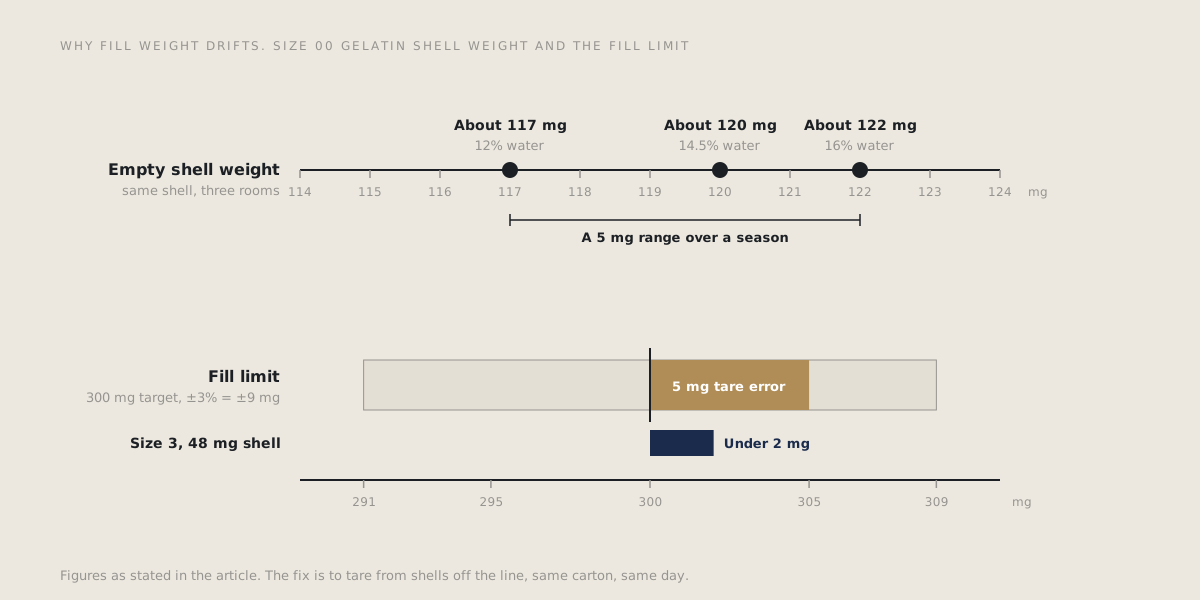
Because the empty shell weight moved, and your fill weight check subtracts it. Most in-process weight checks weigh the filled capsule and take off an average empty shell weight measured earlier. If the shells you tared were at one humidity and the shells on the line are at another, the difference lands in your fill weight figure and looks like a machine problem.
Here's the arithmetic. A size 00 gelatin shell at 14.5% water weighs about 120 mg. Dry it to 12% and the same shell weighs about 117 mg. Let it climb to 16% and it weighs about 122 mg. So a lot can wander through a 5 mg range on shell weight alone, across a moisture range that a real room will produce over a season. On a 300 mg fill target with a ±3% tolerance, which is ±9 mg, a 5 mg shift in the shell tare eats more than half the tolerance before the machine has done anything. On a size 3 with a 48 mg shell the swing is under 2 mg, which is why the fault shows up first on the big sizes.
The fix is to tare from the capsules that are on the line, from the same carton, on the same day, and to retare when the room changes or a new lot goes on. If the fill weight has drifted and the dosing settings haven't moved, weigh twenty empty shells from the hopper before you touch the machine. How to calculate fill weight from bulk and tapped density, and the tamping that goes with it, are worked through separately.
Does the finished product need a desiccant or foil?
Sometimes, and the shell won't decide it for you. The empty capsule's five-year shelf life says nothing about the shelf life of what you put in it. Once filled, the product is a shell and a fill in a container, and the container is what stands between the fill and the room.
The shell buys time. A gelatin or HPMC film is a modest barrier to water vapor, enough to slow a hygroscopic fill's uptake over hours, not months. Over a shelf life it's the bottle or the blister that does the work. An induction-sealed bottle with a desiccant canister holds a hygroscopic fill dry for years. A blister in aluminum foil does the same and adds a barrier to oxygen. A plain screw-cap bottle with no seal holds off very little.
Desiccants need care around gelatin. A canister in a bottle of gelatin capsules will dry the capsules nearest to it along with the fill, and gelatin dried below 13% is on its way to brittle. A canister sized for the headspace and the fill, rather than the largest one the packer had, keeps the capsules inside the window. HPMC capsules tolerate a desiccant with no such concern, which is one more reason HPMC and hygroscopic fills go together.
What answers the question is a stability study. The standard conditions are the ones in ICH Q1A(R2), 25 °C and 60% RH long term, 30 °C and 65% intermediate, and 40 °C and 75% accelerated, in the pack you intend to sell. The accelerated leg tells you in six months what the long-term leg tells you in two years, and the pack that keeps the fill in specification and the shell inside its window is the one to use. A dissolution failure in the accelerated study on a gelatin product is the cross-linking problem from earlier on this page, and the answer is usually the shell rather than the pack. Nothing here is a claim about what the capsule's contents do for anyone. It's water, the shell, and the container.
What does the auditor expect me to record?
That you knew the conditions and can show it. Each regime that touches a capsule product asks the same thing in different words. Store components under conditions that protect them, and keep records that prove you did.
Table 5. Storage expectations by regime. The text of each is short; the evidence the auditor asks for isn't. The AI prompt pack at the foot of the page builds the records for whichever of these you run.
| Regime | Who it applies to | What it says about storing capsules | What the auditor looks for |
|---|---|---|---|
| 21 CFR 111 (US dietary supplement cGMP) | Supplement manufacturers and their contract manufacturers in the US | Section 111.455. Hold components under appropriate conditions of temperature, humidity, and light so their identity, purity, strength, and composition are not affected | A written storage specification for capsules, temperature and humidity records for the store, and what you did about excursions |
| 21 CFR 211 (US drug cGMP) | Pharmaceutical and clinical supply | Section 211.80. Components stored to prevent contamination and off the floor; each lot identified and its status marked | The same, plus lot status, quarantine, and release records |
| EU GMP Chapter 3 | MHRA and EU licensed sites | Storage areas clean, dry, within acceptable temperature limits; special conditions provided, checked, and monitored; receiving bays protect from the weather | Temperature mapping of the store, monitoring records, alarm and excursion handling |
| BRCGS Global Standard for Food Safety | UK and EU supplement manufacturers selling to retailers | Raw materials stored to prevent deterioration; storage conditions specified and controlled; first-expired-first-out rotation | A storage specification from the supplier or your own, monitoring records, first-expired-first-out evidence |
| ISO 22000 and HACCP-based food safety systems | Food-regulated supplement sites | Prerequisite programs for storage; hazards from storage conditions assessed | The prerequisite program document, the hazard analysis, the records it generates |
| ISO 9001 | Any site with a certified quality system | Clause 8.5.4, preservation of outputs; clause 7.1.5, monitoring equipment calibrated (same numbers in the 2015 and 2026 editions) | The procedure, the calibrated hygrometer and thermometer, the records, and the corrective action when a reading went out |
Swipe across to see every column.
In practice a quality manager needs four things. A storage specification for empty capsules, which is the window in Table 1 written into your own document with the reason attached. A calibrated way to measure the store, which for most sites is a data-logging thermohygrometer in the capsule area, checked against a reference once a year. A record, which the logger produces. And a rule for what happens when the record goes out of range, which is where most audits find the gap. "We noticed and did nothing" is the finding. "We noticed, quarantined the lot, ran a loss-on-drying check, and released it with the result attached" is the answer.

How do I tell if a lot has been damaged?
Look, weigh, and bend, in that order, and ask the supplier for the loss-on-drying figure before you take delivery. Capsules that have been outside the window tell you in one of three ways.
Look first. Damp-damaged capsules stick together in the bag, show dents or flat spots, or have a slight sheen where the film has softened and reset. Dry-damaged capsules look normal until you handle them, which is why looking isn't enough.
Then weigh. Twenty capsules from the bag on a balance that reads to 0.1 mg give you an average shell weight to compare with the certificate and with your last lot of the same size. A gelatin lot that's a few milligrams light on a size 00 has lost water. A lot that's heavy has gained it. The arithmetic is in the fill weight section above. If you have a moisture analyzer or an oven, loss on drying at 105 °C to constant weight is the test on the certificate and takes under an hour.
Then bend. Take ten bodies and squeeze each one gently between finger and thumb across the open end. A gelatin body inside the window flattens and springs back. A dry one cracks along its length with a click you can hear. HPMC bodies flex regardless, so the squeeze test only tells you about gelatin. A more formal version drops a capsule from a fixed height onto a hard surface and counts the breaks, and that's the test the makers publish.
When you order, ask for the certificate of analysis with the loss-on-drying result for the lot, the manufacture date, and the storage conditions printed on the carton. A supplier who can't give you the first two hasn't got a five-year shelf life to offer, whatever the website says. How to check a certificate of analysis against the specification, line by line, is worked through separately.
What is an AI prompt pack?
An AI prompt pack is a small set of files you load into the AI assistant you already use. The assistant then asks you the right questions, works through them with you using our reference data, and shows its working as it goes. We publish one with each article on this site.
Inside the Capsule Storage and Shelf Life AI Prompt Pack is a prompt file that turns your assistant (Claude, ChatGPT, Gemini, Grok) into a storage advisor, a reference sheet with the figures from this page, and a spreadsheet the assistant fills in as your storage specification and your lot retest log. Paste the prompt in and it asks which material you run, what your warehouse and filling room do through the year, whether cartons are opened and how long they stand, what the fill is, and what the finished pack is. It gives you back a storage specification for empty capsules, a seasonal risk rating for your rooms with the heating and cooling arithmetic done, a rule for opened cartons, a desiccant and foil recommendation for the finished product, and a stability and retest plan on the ICH conditions.
Then it asks which quality system you run. Tell it 21 CFR 111, 21 CFR 211, EU GMP, BRCGS, ISO 22000, ISO 9001, or none yet, and it writes the storage procedure in the shape that system expects, tells you which records to keep and where they sit in your document structure, and gives you the excursion rule an auditor will accept. A small brand with no system yet gets a plain one-page procedure and a monitoring log. A contract manufacturer with a BRCGS certificate gets the prerequisite program language and the cross-references.
Why a pack and not just the tables? Because the tables can't ask you what you haven't told them. The pack works for the founder whose co-packer has just asked "what's your storage spec for these" and who doesn't have one, and it works for the quality manager who has one and wants the excursion rule and the retest plan written down before the next audit. It's the conversation we'd have with you on a call, packaged so you can have it at your desk with your own logger data in front of you.
Use the form below to request this resource. Newsletter updates are a separate, optional choice.
Get the Capsule Storage and Shelf Life AI Prompt Pack
Request the Capsule Storage and Shelf Life AI Prompt Pack
Leave your details to request this resource.
If we haven't answered your question, or your warehouse doesn't fit the window and you'd like to talk through what that means for the lot on the floor, reply to any email from us or write to us through the contact page. A person who knows the material will get back to you.
Related.
- Gelatin vs HPMC capsules. Which to use, and why
- Hygroscopic, oily, and low-moisture fills
- Faults and troubleshooting on the capsule filling line
- What a certificate of analysis and a specification contain
- How to qualify an empty capsule supplier
- Capsule fill weight from bulk and tapped density
Sources. Water content specifications, storage windows, ideal point, packaging, and shelf life statements from the technical literature and product pages of the capsule makers, September 2026, as follows. Lonza Capsugel, Coni-Snap FAQ: https://www.capsugel.com/knowledge-center/nutra/capsules/conisnap-frequently-asked-questions; Lonza Capsugel, hard gelatin capsules page (shelf life, and three years for China): https://www.capsugel.com/pharmaceutical-solutions/hard-empty-capsules/hard-gelatin-capsules; Lonza Capsugel, Vcaps Plus FAQ: https://www.capsugel.com/knowledge-center/nutra/capsules/vcaps-plus-frequently-asked-questions; Lonza Capsugel, Vcaps Plus white paper (copy on pharmaexcipients.com): https://www.pharmaexcipients.com/wp-content/uploads/attachments/Vcaps+Plus+White+Paper.pdf, and Vcaps Plus product page: https://www.capsugel.com/pharmaceutical-solutions/hard-empty-capsules/vcap-plus-hpmc-capsules; Qualicaps, FAQs (shelf life): https://www.qualicaps.com/knowhow/faqs; Qualicaps, Quali-V technical brochure: https://qualicaps.com/-/media/Project/CommercialInfo_caps/Qualicaps_-Technical-brochure_Quali-V.ashx; Qualicaps, Quali-V Extra Dry brochure: https://qualicaps.com/-/media/Project/CommercialInfo_caps/Qualicaps_Brochure_Quali-V-Extra-Dry.ashx; Qualicaps, Quali-V Extra Dry (ONdrugDelivery): https://ondrugdelivery.com/quali-v-extra-dry-a-novel-capsule-for-delivering-hygroscopic-pharmaceutical-drugs/; Qualicaps, Quali-G product page: https://qualicaps.com/en/Capsules/pharma/quali-g; ACG, ACGcaps H+ product page: https://www.acg-world.com/capsules/vegetarian/acgcapstm-h; CapsCanada (Lyfe Group), FAQs: https://lyfegroup.com/faqs/; CapsCanada (Lyfe Group), storage and handling guides: https://blog.lyfegroup.com/best-practices-for-storing-packaging-and-transporting-capscanada-capsules-k-caps-and-g-caps-guide and https://blog.lyfegroup.com/what-you-should-know-about-storing-handling-capsules; Roxlor, packaging and storage: https://www.roxlor.com/packaging-and-storage.php; Suheung, EMBO CAPS VG PRO brochure: https://www.embocaps.com/sub/brochure/EMBOCAPSVGPRO_2023.pdf. Batch loss-on-drying data and the 13% flexibility threshold from Stegemann et al., AAPS PharmSciTech, 2014, https://link.springer.com/article/10.1208/s12249-014-0094-y. Brittleness below 40% RH and the shell-to-fill moisture model from Kontny and Mulski, International Journal of Pharmaceutics, 1989, https://www.sciencedirect.com/science/article/abs/pii/0378517389901683. Breakage approaching 100% below 10% water and HPMC intact at 2%, and the fill-side water fix, from the capsule testing chapter in Pharmaceutical Dosage Forms: Capsules. Timed weight gain at 25 °C and 75% RH from Magramane et al., Pharmaceutics, 2025 (capsule shells made for inhalation products), https://www.mdpi.com/1999-4923/17/7/877. Equilibrium at 48 hours from Yang et al., International Journal of Biological Macromolecules, 2020. Maximum uptake and permeability from Barham, Tewes, and Healy, International Journal of Pharmaceutics, 2015. Cross-linking mechanism, the 60 to 70% RH peak, and the two-tier test from Lu and Shah, Dissolution Technologies, 2017, and Song, Cui, and Xie, Pharmaceutical Technology, 2011. The 2% moisture rule and the glycerin, propylene glycol, and PEG incompatibilities from Biyani, Pharmaceutical Technology, 2018, https://www.pharmtech.com/view/selecting-excipients-liquid-filled-hard-capsules. Senna extract breakage counts from Araujo et al., Indian Journal of Pharmaceutical Sciences, 2020. Hygroscopic polymer case from Chang et al., Journal of Pharmaceutical Sciences, 1998. Gelatin softening point and static from an HVAC industry note on capsule storage, 2021. Regulatory text from 21 CFR 111.455 (eCFR), https://www.ecfr.gov/current/title-21/chapter-I/subchapter-B/part-111/subpart-M/section-111.455, 21 CFR 211.80 (eCFR), https://www.ecfr.gov/current/title-21/chapter-I/subchapter-C/part-211/subpart-E/section-211.80, EU GMP Chapter 3 (EudraLex Volume 4), https://health.ec.europa.eu/medicinal-products/eudralex/eudralex-volume-4_en, ICH Q1A(R2), https://database.ich.org/sites/default/files/Q1A%28R2%29%20Guideline.pdf, BRCGS Global Standard for Food Safety, https://www.brcgs.com/our-standards/food-safety/, ISO 9001:2015, https://www.iso.org/standard/62085.html (withdrawn 16 Sep 2026, replaced by ISO 9001:2026), and the USP definition of excessive heat. Heated-air humidity arithmetic from the Magnus formula on saturation vapor pressure; the checker on this page uses the same formula. Shell weights by size from the same compilation used on the capsule sizes page.
*Capsules.com supplies empty hard capsules in gelatin and HPMC to manufacturers, brands, pharmacies, and research teams. Capsules Direct Ltd, company number 17362490, 26 Rowood House, Bicester OX26 4PP, United Kingdom. UK 020 3905 1989 · US (816) 445-0042 · capsules.com. *