
Machines and filling
Capsule filling machine troubleshooting. Common faults, their causes, and what to check first
Find the causes of capsule cracking, sticking, separation and fill-weight drift, with checks for hand plates, bench-top fillers, dosators and tamping-pin machines.
Written by Dany, Capsules.com

On this page
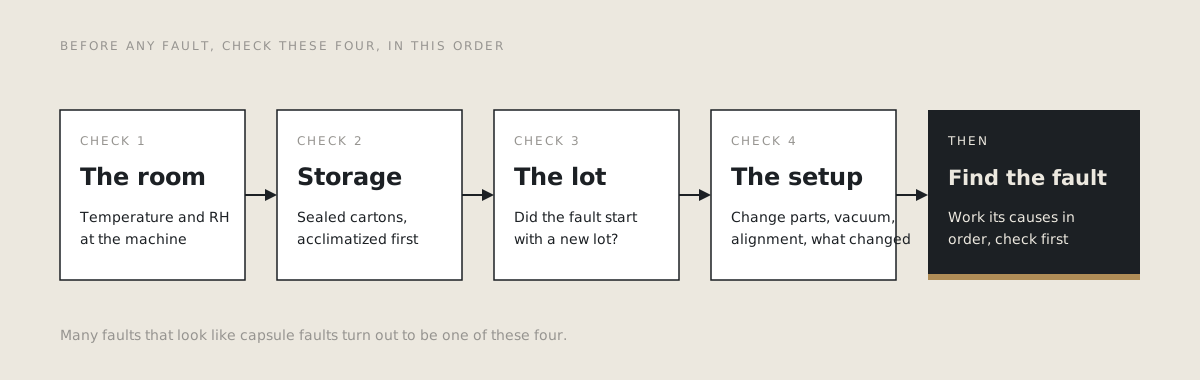
We sell capsules, so it's fair to ask whether we'd ever blame one. Most of the time the cause is somewhere else. Most capsule faults on a filling line come down to four things. The humidity of the room, how the capsules were stored, the lot, and the setup. And when the weight is wrong, it's nearly always the powder or the machine. Check those first, then find your fault below. Under every fault there's a line on when the capsule is the cause, and what to send the supplier.
This page covers the four fillers the rest of our Knowledge Center uses. Hand plates, bench-top fillers (including semi-automatics with an auger), dosators, and tamping-pin machines. A symptom can have a different cause on each, so every fault says which fillers it applies to.
It's in two halves, because that's how you'll arrive. The first half is for when the capsule won't behave. The second is for when the weight is wrong. You can request the Capsule Filling Troubleshooting AI Prompt Pack using the form at the foot of the page.
- What to check before you blame anything. The room, the storage, the lot, and the setup.
- Quick reference. Every fault, the fillers it happens on, and where it usually starts.
- When the capsule won't behave. Separating, cracking, denting, telescoping, popping open, static, feeding, powder on the outside.
- When the weight is wrong. Light, heavy, spreading, drifting, and plugs that won't form or won't eject.
- When it is the capsule. The faults that are the maker's, and what to send.
- What to ask your capsule supplier. Six questions before the next order.
- Setting up the room so the faults don't start. Vacuum, grounding, steel, air, and cleaning.
- Request the AI prompt pack. Send a request using the form at the foot of the page.
The size chart and capsule dimensions are on the capsule sizes page, and the working behind fill weight and tamping is on the density page.
What should I check before I blame the capsule, the machine, or the powder?
Check the room, how the capsules were stored, the lot, and the setup, in that order. Those four are behind most of the faults on this page, and each one takes a few minutes.
1. The room. Measure temperature and relative humidity (RH) at the machine, not in the corridor or the office. Capsule makers publish a storage range of 15 to 25 °C (59 to 77 °F) and 35 to 65% RH for both gelatin and HPMC capsules. Gelatin shells hold water as part of their structure, usually 13 to 16% by weight. In dry air they lose it and turn brittle, and in damp air they take it up and go soft. HPMC holds much less water and doesn't go brittle when it dries, but in dry air it picks up static.
2. Storage. Capsules should stay in their sealed cartons, with the inner bag closed, away from heaters, outside walls, and damp floors until they're needed. Bring cartons into the filling room early and let them reach room temperature before you open them. A carton opened cold in a warm room can put condensation on the shells.
3. The lot. Write down the lot number and ask one question. Did the fault start with a new lot? If it did, compare the certificate of analysis and dimensions with the last lot that ran well. If the fault comes and goes within one lot, the lot is less likely to be the cause.
4. The setup. Confirm the change parts (the size-specific segments, discs, and pins) match the capsule size, then check vacuum, suction depth, and segment and pin alignment against the machine manual. Then ask what changed since the last good run. A new operator, a maintenance job, a new powder lot, a different speed. A lot of faults that look like capsule faults turn out to be a size-part or alignment mismatch.
If the room needs work, the section on setting up the room has what I'd change first.
Which fault is it, and where does it usually start?
Find the symptom, check it happens on your kind of filler, and start where the third column points. The last column is the short answer to whether the capsule is to blame.
Table 1. Faults by filler and usual cause. Hand plate (HP), bench-top (BT), dosator (D), tamping-pin (TP).
Swipe across to see every column.
Half one. When the capsule won't behave
Why are my capsules separating in the hopper?
Usually because the air is too dry or the capsules arrived already loose, and you can tell which in two minutes. Take a sample straight from an unopened carton and count the separated capsules before anything touches the machine.
Fillers. Bench-top, dosator, tamping-pin.
What you see. Loose caps and bodies in the hopper, jams at the rectifier (the block that turns every capsule body-down before it drops into the segment), and empty or half capsules further down the line. The segment is the pair of plates with a ring of holes that holds each capsule while it's opened, filled, and closed.
Likely causes, most common first.
- The capsules arrived already separated or loosely pre-locked, from manufacture or rough handling in transit.
- The air is too dry, so gelatin shells shrink slightly and the pre-lock loosens.
- Too much agitation or vibration in the hopper or feed.
- Wrong or worn size parts, or a feed tube meant for a different size.
- Cap and body dimensions out of tolerance for the lot.
Check first. The count from an unopened carton.
Is it the capsule? If they're already separated in the carton, yes, and the supplier should hear about it with the lot number. If they arrive intact and separate in the machine, check the room humidity and the feed first.
Why are my gelatin capsules cracking?
Most often because the room or the store is too dry, and the gelatin has lost the water that keeps it flexible. Measure the RH at the machine, then see whether the empty capsules crack or only the filled ones.
Fillers. All four.
What you see. Capsules cracking or shattering in the machine, or cracks appearing in storage after filling.
Likely causes, most common first.
- Low humidity in the filling room or the store, which pulls the shell's moisture below its 13 to 16% range. Below about 13% gelatin goes brittle.
- Cartons stored near heat or somewhere cold, or opened before they reached room temperature.
- A hygroscopic fill that draws water out of the shell after filling.
- Closing force or closing pin setting too high.
- Shell moisture out of specification in the lot.
Check first. RH at the machine, then whether empty capsules crack or only filled ones.
Is it the capsule? If empty capsules crack in a room within range, check the lot's moisture against its certificate of analysis. If the cracks appear only after filling with a powder that pulls in moisture, the fill is taking water from the shell, and HPMC is often the better material for that fill. The hygroscopic fills article covers the choice.
What causes dented caps on a capsule filling machine?
Nearly always the closing setup or the fill, not the capsule. Check the closing station setting against the manual for the size, then look at how high the powder sits in an open body.
Fillers. Bench-top, dosator, tamping-pin.
What you see. A flat spot or dimple on the dome of the cap after closing.
Likely causes, most common first.
- Closing pin height or force set too high for the size.
- The slug is too long or too hard, or the body is overfilled, so the cap closes onto powder. On a tamping-pin machine, check the dosing disc thickness matches the size.
- High humidity softening the shells.
- Closing pins misaligned or worn.
Check first. The closing station setting, then the fill height.
Is it the capsule? Rarely. If the setting and the fill height are right, soft shells from a damp room are the next suspect.
Why are my capsules telescoping or not locking?
Usually an overfilled body or a closing setting that's off, and closed length tells you which. Measure the closed length of ten capsules against the specification, and check the fill height.
Fillers. All four. On a hand plate it shows when the cap plate is pressed down onto a proud fill.
What you see. The body pushed up through the cap, or the cap punched through, or capsules that stop short of the lock and reopen.
Likely causes, most common first.
- An overfilled body, or a slug too long for the body. The density article explains sizing the fill to the body.
- Closing setting, too far for telescoping, not far enough for capsules that don't lock.
- Soft shells from high humidity.
- Wrong size parts.
- Cap and body dimensions out of tolerance.
Check first. Closed length of ten, and the fill height.
Is it the capsule? Sometimes. If closed length is off across capsules that are correctly filled and closed at the right setting, compare their dimensions with the lot specification.
Why are my capsules splitting or not opening at separation?
Usually because the segments are out of alignment or the vacuum is wrong, so check both before you look at the capsule. Separation is the station where vacuum pulls the body down out of the cap, so the two halves can be filled apart.
Fillers. Bench-top, dosator, tamping-pin.
What you see. Caps split or creased when the segments separate, or bodies left in the cap so the capsule never opens.
Likely causes, most common first.
- Upper and lower segments or bushings out of alignment. A bushing is the hardened insert that lines each hole in the segment.
- Vacuum too low, suction depth set wrong, or a clogged vacuum filter (see suction falling off below).
- Worn bushings or segments, or fines built up inside the segment bores.
- Wrong size parts.
- Thin capsule walls, which blow out at the bottom when the vacuum is high.
Check first. Segment alignment with the alignment tool for your machine, then the vacuum reading and filter.
Is it the capsule? Sometimes, but only look there once alignment and vacuum are confirmed good. Thin walls are the capsule's fault (see when it is the capsule). Most machines have an ejection station that throws out capsules that didn't separate, so an unopened capsule doesn't go through as an empty. The trouble is what happens next. The slug meant for that pocket falls through the empty segment, wastes powder, dirties the segment, and puts powder into the machine, which feeds the sticking segment and vacuum filter faults below.
Why are my capsules getting crushed in the machine?
Mostly the machine, not the capsule or the courier. Orientation and separation out of calibration crush capsules, and so does a body that isn't seated all the way down before the tamping station.
Fillers. Dosator, tamping-pin.
What you see. Crushed or dented capsules in the hopper or the segments, or bodies with the top ripped off.
Likely causes, most common first.
- Orientation or separation out of calibration.
- A body not seated fully in the lower segment, so its top is torn off as it passes under the tamping station.
- Occasionally, rough handling in transit.
Check first. Orientation and separation calibration, then whether bodies sit fully down in the lower segment before tamping.
Is it the capsule? Rarely. If crushed capsules are already in an unopened carton, it's transit, and that goes to the supplier and the carrier.
Why are my capsules popping open after filling?
Usually trapped air, a closing speed that's too fast, or a slug that springs back. Check whether your capsules have vents, then the closing speed, then how firmly the fill is packed.
Fillers. All four.
What you see. Capsules that closed properly come apart again, on the machine or later in the bin.
Likely causes, most common first.
- Air trapped in the body as it closes. Many capsule designs have a ring of small dimples (vents) that let air out around the cap. A design without them traps air.
- Closing speed too high for the air to escape, or fines blocking the vents.
- An elastic slug. The powder is compacted, pushed in, then springs back and forces the capsule open. I'd treat that as overfilling.
Check first. Vents on the capsule, then closing speed, then the fines content of the blend.
Is it the capsule? Not usually. Only when an unvented design is being used where a vented one is needed. For the elastic slug, reduce the fill or the tamping.
Why do HPMC capsules stick to the hopper?
Static, which builds as the air dries out. Check the RH at the machine, then check the machine is grounded.
Fillers. All four.
What you see. Capsules clinging to the hopper, the feed tubes, or each other, and bridging so they stop feeding. Sometimes a ring of powder held just under the cap edge.
Likely causes, most common first.
- Dry air. Static builds as humidity falls, and HPMC is more prone to it than gelatin.
- The machine or hopper isn't properly grounded.
- Plastic scoops, liners, bags, or bins adding charge in handling.
Check first. RH at the machine, then grounding.
Is it the capsule? It's a property of HPMC, not a fault in the lot. Manage it through room humidity and grounding.
Why isn't my capsule machine picking up capsules?
Most often a blocked or bridged feed, or the wrong size parts. Clear and look along the feed path, confirm the size parts, then check the vacuum.
Fillers. Bench-top, dosator, tamping-pin.
What you see. Empty pockets in the segment, capsules not feeding from the hopper, or capsules sitting at an angle in the sowing station (where each capsule is turned the right way up and set into the segment) instead of dropping straight in.
Likely causes, most common first.
- A blocked or bridged feed tube or hopper, often from static or damaged capsules.
- Powder built up in the sowing fingers or the segment bores, holding capsules back.
- Rectifier or orientation settings, or wrong size parts.
- Vacuum or suction too weak.
- Hopper level too low.
- Separated or out-of-tolerance capsules jamming the feed.
Check first. Clean the feed path, sowing fingers, and segment bores, then run empty capsules. If they drop cleanly, it was powder. If they still cling, look at static.
Is it the capsule? Sometimes, and if it is you'll usually see damaged or separated capsules in the jam itself.
Why is there powder on the outside of my capsules?
Powder escaping a capsule that isn't fully locked, a dirty machine, or static. Check the lock first, then how clean the machine is, then static.
Fillers. All four.
What you see. A dusting of powder on the shells, or a ring of powder just under the cap edge. The ring is often static.
Likely causes, most common first.
- The capsule isn't fully locked, so powder leaks at the join.
- Fines pushed out on closing, or a very fine powder.
- A machine running dirty. Fines coat the hopper, the sowing station, and the segments, and dirty the empty capsules before they're filled.
- Static holding powder to the shell.
Check first. The lock, then machine cleanliness and air extraction, then static.
Is it the capsule? No. A polisher often won't shift a ring held by static unless it also neutralizes the charge. Deionized (anti-static) air helps.
Why are capsules sticking in the segments?
Fines building up inside the segment bores, because the machine isn't being cleaned and the air isn't being extracted often enough. Clean the segments and check the extraction.
Fillers. Dosator, tamping-pin.
What you see. Capsules sticking in the bores, poor separation, and capsules damaged when they're ejected.
Check first. The segment bores, and the air extraction.
Is it the capsule? No.
Why does the suction fall off during a run?
The vacuum filter is clogging with powder, and it builds slowly then cascades into separation faults. Check and clean the filter, and look at where the powder is coming from.
Fillers. Bench-top, dosator, tamping-pin.
What you see. Separation fine at the start of the shift and getting worse, then capsules hanging unseparated from the segment.
Likely causes. Powder pulled into the separation vacuum, often from dirty segments or from slugs falling through after an unseparated capsule is ejected.
Check first. The vacuum filter and the reading at separation.
Is it the capsule? No. The fix is an inline cyclone powder separator between the machine and the vacuum pump, which is covered in setting up the room.
Why is powder sticking to the tamping pins, dosing disc, or auger?
A sticky blend, most often a botanical high in natural sugars. It makes slugs and weights inconsistent, and it makes the machine work much harder to form and eject each slug.
Fillers. Bench-top with an auger, dosator, tamping-pin.
What you see. Build-up on the pins, in the dosing disc bores, or in the auger tube. Weights wander, ejection gets heavy, and the machine sounds laboured.
Why it matters. Heavy ejection wears bearings and gearboxes faster on automatic machines and loads the auger on a semi-automatic. Build-up in an auger tube can snap the auger blade.
Check first. Clean the parts in an ultrasonic bath and see whether the fault goes. Then choose a route. Coated tamping pins if you don't want lubricant in the blend, a lubricant added to the blend, or carbide-lined dosing discs, which make ejection smoother.
Is it the capsule? No.
Why are filled capsules sticking together in the bin?
Moisture, warmth, powder on the outside, or static, and plastic makes the static worse. Take plastic out of the room first, because it's the quickest change.
Fillers. All four.
Likely causes. Damp or warm air, sticky powder left on the shells, or static from the product or from a machine that isn't grounded.
Check first. Don't fill from a plastic bag or dump into a plastic bag or tote. Use stainless steel where you can and ground everything. Then keep the machine clean, cycle the air to remove fines, and check the segments aren't putting powder on the outside of the capsules.
Is it the capsule? No.
Can a capsule polisher damage capsules?
It can, but it's uncommon. When it happens it's bristles that are too firm, or capsules staying in too long.
Check first. Bristle firmness, and the polisher's angle, which sets how long each capsule stays in.
Is it the capsule? No.
Why do my capsules smell or look discolored?
Nearly always the ingredient, not the capsule. Empty capsules don't really smell when opened, and discoloration usually comes from an ingredient oxidizing. B vitamins are a common example, pungent and quick to oxidize.
Check first. The ingredient. A microencapsulated grade, or a different form of the same ingredient (a different magnesium compound, say), often fixes it.
Is it the capsule? Rarely.
Half two. When the weight is wrong
A capsule at the wrong weight looks exactly like one at the right weight, so nobody on the line sees these faults happen. QC finds them. That's why every fault in this half starts with a scale. Weigh at the start of the run, at intervals through it, and at the end. I'd pay most attention at the end, when the hopper is emptying.
The short version of the density article helps here. A capsule holds a volume, and the weight you get into it depends on how dense the powder is inside it, on your machine.
Why are my capsules light or half empty?
On a hand plate or bench-top, usually a low hopper, an uneven sweep, or powder bridging over some bodies. Weigh a handful first to confirm the fill is light rather than the size wrong, then check the sweep and the hopper level.
Fillers. Hand plate, bench-top.
Likely causes, most common first.
- The hopper ran low, or the plate wasn't swept evenly.
- Powder bridged or rat-holed over some bodies because it flows poorly. A Hausner ratio above 1.4 is the warning sign on paper, and the density article has the table.
- The tamper missed a row.
Is it the capsule? No.
Why does my fill weight drop before the hopper is empty?
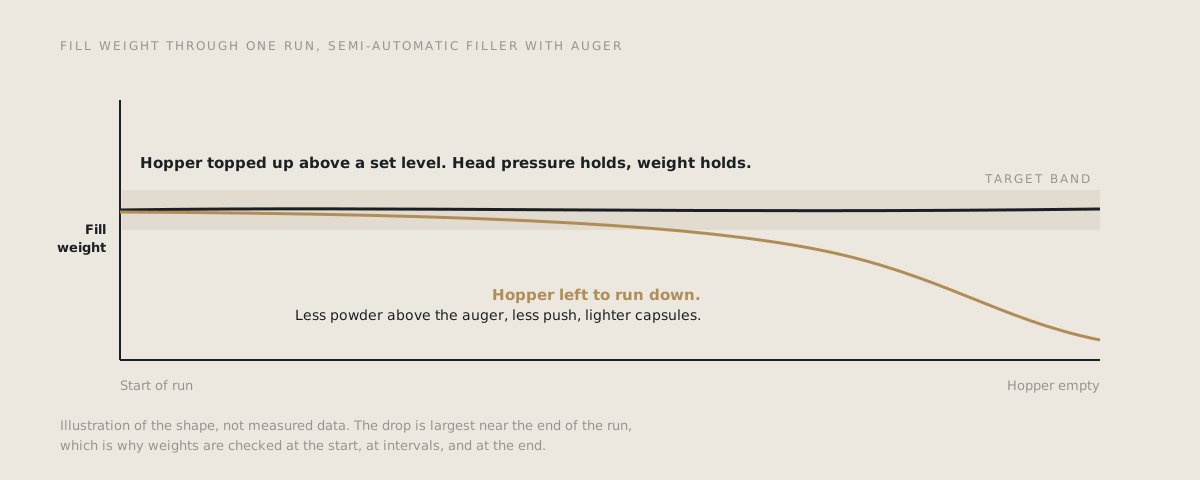
Head pressure. On a semi-automatic with an auger, the weight of powder sitting above the auger is part of what pushes powder into the bodies. As the hopper empties the pressure drops, and the fill weight drops with it, well before the machine runs out.
Fillers. Bench-top and semi-automatic with an auger.
Check first. Weigh at intervals through the run, not only at the start, and see whether the drop follows the hopper level.
Fix. A procedure that tops the hopper up above a set level, so the head pressure stays steady. Near the end of a run, slow the machine so it has longer to fill.
Is it the capsule? No.
Why do my capsules look half full when the weight is right?
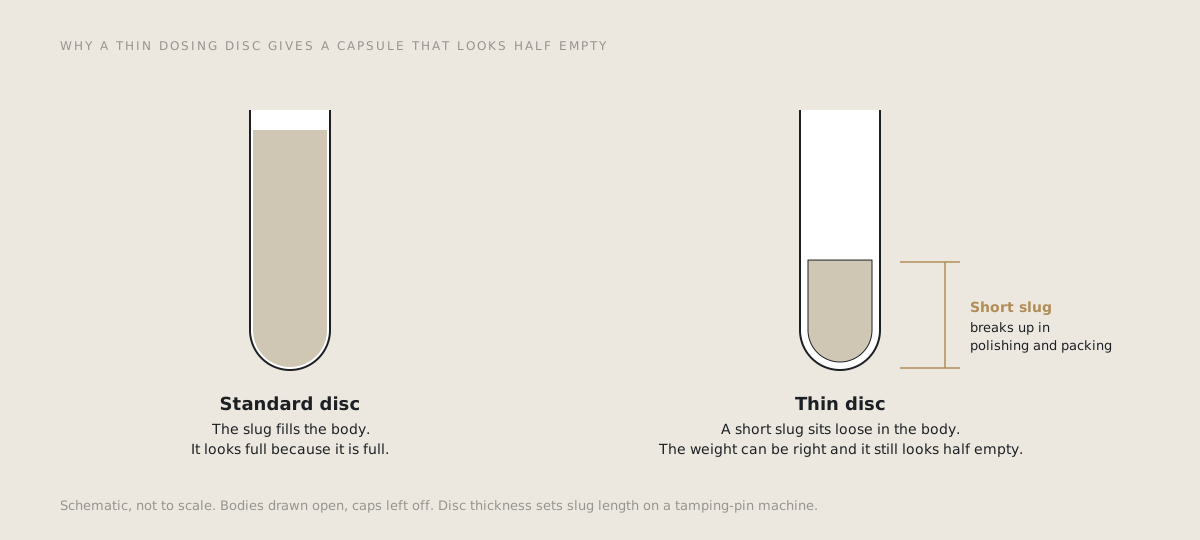
A dosing disc thinner than the body. The machine makes a short slug that sits loose in a half-empty body, survives the machine, then breaks up in dedusting, polishing, and packing. By the time it's in the bottle the capsule looks half filled with loose powder, weighs what it should, and gets returned anyway.
Fillers. Tamping-pin.
Check first. The disc thickness against the size. The standard disc for a 00 is about 22 mm. A 10 mm disc on a 00 makes a slug about half the body's length.
Fix. If the short slug was deliberate (a part fill on a tamping-pin machine), inspect capsules after packing, not only off the machine. Better routes are a smaller size, a dosator, or densifying the blend, and the density article explains each.
Is it the capsule? No.
Why am I getting occasional empty capsules off my automatic machine?
A fault on the machine, not a sizing problem. The powder ran low, a dosing disc bore blocked, or a slug dropped in transfer.
Fillers. Tamping-pin.
Check first. The powder level sensor, then clear the bores, then see slugs crumbling below. Empties can also come from unseparated capsules, covered in splitting at separation.
Is it the capsule? No.
Why are my slugs crumbling on transfer?
The tamping is set too light for this powder. The slug is below the lightest density that holds together, so it falls apart as the dosing disc carries it over the body.
Fillers. Tamping-pin.
What you see. Powder in the machine, rejects climbing, light capsules.
Fix. Raise the tamping in steps until slugs transfer cleanly. That setting is the slug floor for this powder, and the density article shows how to measure it.
Is it the capsule? No.
Why has the weight moved when the capsules are still full?
The blend's density has changed. A tamping-pin machine fills to a set depth, so it delivers a volume. If the blend gets lighter or heavier, the weight moves without the capsule looking any different.
Fillers. Tamping-pin.
Likely causes. A new ingredient lot with a different particle size, moisture pickup, segregation in the hopper, or a different blend time.
Check first. Bulk and tapped density on the new lot, against the last good one.
Fix. Measure density on every new lot before setting up and keep a record, so drift can be traced to an ingredient. Reset the tamping rather than changing the size.
Is it the capsule? No.
Why are my capsules over the target weight?
The size is too big for the dose. Filled full, even loosely, it holds more powder than the dose needs.
Fillers. All four.
Fix. Go down a size. A hand plate or bench-top fills the bodies full and can't part fill evenly. A dosator can meter a part fill, at the cost of more weight variation. A tamping-pin machine needs a thinner dosing disc, with the loose-pellet fault above. The calculator on the sizes page flags this by filler.
Is it the capsule? No.
Why is my capsule fill weight drifting during a run?
On a long run, usually segregation. Vibration in the hopper or auger separates the blend, and air in a freshly made blend makes its density inconsistent.
Fillers. All four, most often tamping-pin and bench-top with an auger.
Check first. Weigh at intervals and check the tamping setting hasn't moved.
Fix. Two things I'd do before anything else. Deaerate the blend, which means blending, then leaving it sealed for about 48 hours so the air vents before filling. Sealed matters, because a hygroscopic blend left open picks up moisture. Then keep the head pressure steady with fresh powder. If the drift persists, granulate.
Is it the capsule? Rarely. Body volume is consistent within a size from the same maker. Across makers it isn't, which is the new supplier fault below.
What causes wide capsule fill weight variation?
Poor flow, most often. A powder that doesn't flow evenly doesn't feed evenly, and the weights spread from capsule to capsule.
Fillers. All four.
Likely causes, most common first.
- Poor flow. A Hausner ratio above 1.4, or a Carr's index above about 28, is the warning sign.
- On a tamping-pin machine or dosator, a fill that's close to the powder's ceiling. The harder the tamping, the more the weights spread.
- On a dosator, a part fill with a lot of empty space, where loose powder settles unevenly.
Fix. A flow aid, granulation, or a different grade of the same ingredient for flow. Back off the tamping or go up a size for a fill near its ceiling. Go down a size for a dosator part fill. Flow is confirmed on the machine, not on paper.
Is it the capsule? No.
Why is the middle of my capsule plate full and the edges empty?
There wasn't enough powder to reach the edge bodies before the middle ones were full. Powder goes on in the middle and gets spread outward, so trying to part fill a plate does this every time.
Fillers. Hand plate.
Fix. Use enough powder to fill every body, and go down a size if the dose is smaller than a full body holds at bulk density.
Is it the capsule? No.
Why won't the plug eject from the dosing disc?
The tamping is set too hard, or the powder is sticking to the bore. The powder is at or past the densest it'll go for this setting.
Fillers. Tamping-pin.
Fix. Back the tamping off one step. Check the bore for build-up and the lubricant level in the blend (see powder sticking to the pins).
Is it the capsule? No.
Why does fill weight stop rising when I set the tamping deeper?
The overload spring behind each pin is giving way. The pin depth is set deeper than the powder will compress, so the spring, which is there to stop a pin bending or the machine crashing, takes the extra travel instead of the powder.
Fillers. Tamping-pin.
What you see. Deeper settings but no more weight, hard plugs, and pins or a machine that sound laboured.
Fix. Back the depth off until the fill weight responds to the setting again. If the target weight needs more than that, densify the blend or go up a size. Don't fit a stiffer spring to force it.
Is it the capsule? No.
What if my dose falls between two capsule sizes?
On a tamping-pin machine, the dose is too loose to slug in the larger size and above the ceiling in the smaller one. Move the fill weight into one size's range, change the blend, or run it on a dosator, which can part fill. The calculator names both weights.
Fillers. Tamping-pin.
Is it the capsule? No.
Why do a new supplier's capsules jam or fill differently on the same settings?
Capsule dimensions differ slightly between makers, and your segments and dosing discs were set up for the old ones. A size 00 body is published at anywhere from about 0.90 to 0.95 ml across makers' charts.
Fillers. All four.
Check first. The new capsules' internal dimensions against your change parts, before switching. Then run a small batch.
Is it the capsule? It isn't a defect, but it is the capsule. The switching guide covers it.
Why are my weight checks failing?
Rarely the shell. Most nutraceutical makers check weight on a sampled pot or container, and shell weight doesn't vary enough to move that. The fill is the usual cause, most often blend uniformity, or a machine that's clogging or running inefficiently.
Check first. Blend uniformity and deaeration, then machine cleanliness (segments, pins, vacuum).
Is it the capsule? Rarely.
When is it the capsule's fault?
When the fault is already there in a sealed carton, before the capsules touch a machine. Three faults are the capsule maker's, and you can see all three in an empty capsule.
Capsules fused together through the whole box. Not just the top layer, but spread through the carton. Check whether the inner factory bag is intact. If it is, damp can't have got in, so it's heat in transit or storage (most often with gelatin), or twinning at the factory. Twinning happens when caps go onto bodies while the shells still hold some moisture, and a pair that isn't fully dried sticks to its neighbor. Twinning is a capsule fault that gets past a factory which doesn't inspect every capsule.
Double caps and short bodies. A manufacturing defect, and it comes down to the kind of machine the capsules were made on. On a bar machine (a single row of pins on each bar), each body is cut to length and capped straight off the bar, before drying finishes, so each pair finishes drying together. On a plate machine (many rows of pins on one plate), caps and bodies are stripped off in bulk, then cut, then joined in a separate process, and that separate step is where caps can sit over each other and bodies can be cut short.
Pinholes, thin spots, and bubbles in the film. These show up as cracks, not as powder leaking, and they're visible on empty capsules. The wall is too thin, which is set at the factory by the thickness of the gelatin or HPMC solution and how long the pin is dipped. On the machine, a thin wall blows out at the bottom when the separation vacuum is high, or crushes at closing. Worn dipping pins are a second cause, because both the outside and inside diameter shrink as the pin wears. A wall that's too thick is its own fault, and handles poorly on the machine.
What to send the supplier
If the room, the setup, and the powder all check out and the fault stays, write these down before you call any supplier, including us. They turn a complaint into something that can be traced.
- Lot number from the carton label
- Size, material, and color
- Machine make and model, and the size parts fitted
- Room temperature and RH at the machine when the fault happened
- How many capsules were affected, out of how many
- Photos of the fault, a sample of affected capsules, and a sample from an unopened carton of the same lot
- Whether the inner bag was intact
- What you checked and ruled out, from the four checks at the top
Send us those details, whoever made the capsules. Reply to any of our emails or write to the contact page. If they're ours, we'll trace the lot and tell you what we find. If they're someone else's, we'll tell you what we'd check next.
What should I ask my capsule supplier?
Ask how they stop the three in-carton faults above from reaching you. Inspection at the factory catches most of them, and process control catches the ones inspection can't see. These six questions are worth asking before the next order, whoever you buy from.
- Is every capsule inspected by high-speed cameras, both ends and the full body? A good setup presents one end to a camera, then turns the capsule and presents the other, so nothing is hidden.
- Is length checked on every capsule, not sampled? Short bodies and double caps are length faults.
- Which defects are rejected automatically, and can I see the reject records? Double caps, short bodies, dents, holes, and deformities should all be on the list.
- Are your capsules made on a bar machine or a plate machine? The section above explains why it matters. I'd specify a bar machine.
- How do you check wall thickness and outside diameter coming off the line? A camera rarely catches a thin wall, so this needs process control, not inspection.
- How often are the dipping pins inspected and replaced? Worn pins shrink the diameter slowly, even when the wall thickness is right.
A supplier who answers all six without hesitating is one I'd trust with a line. The supplier approval article goes further into the documentation side.
How do I set up a filling room so these faults don't start?
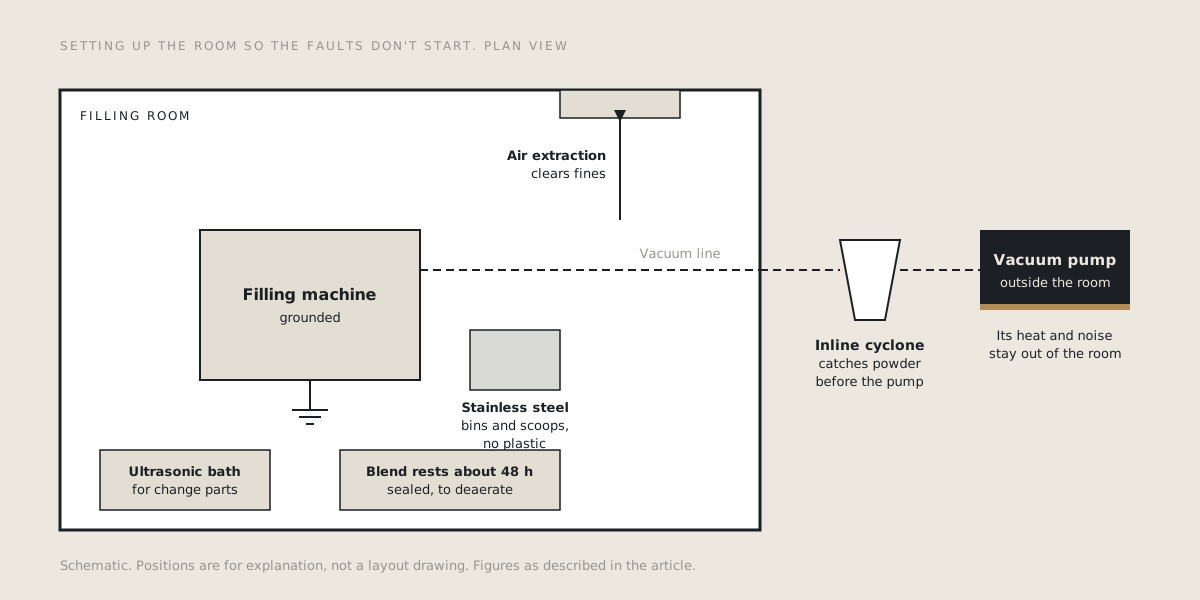
Keep powder out of the vacuum, charge off the capsules, and the air and the change parts clean. Six changes do most of the work, and none of them needs a new machine.
- Put the vacuum pump outside the filling room, with an inline cyclone. An off-the-shelf cyclone powder separator between the machine and the pump keeps powder out of the vacuum, which stops the clogging that turns into separation faults. With the pump outside, its heat is out of the room too, which makes temperature and humidity easier to hold, and the operators on a long shift aren't sitting next to the noise.
- Ground everything. The machine, the hopper, and anything metal the capsules touch. Static is behind the HPMC sticking, the powder ring under the cap edge, and capsules clinging together in the bin.
- Take plastic out of the room. Stainless steel scoops, bins, and totes instead of plastic, and don't fill from or dump into plastic bags.
- Extract the air. Regular air extraction keeps fines off the segments, the sowing station, and the empty capsules.
- Clean change parts in an ultrasonic bath, and dry them. Getting inside segment bores and dosing disc bores by hand is slow, hard work, and sticky residue from botanicals stays in the steel. A written cleaning procedure that includes drying, and an ultrasonic bath to lift residue, means the machine starts every run clean.
- Deaerate the blend before it reaches the room. Blend, then leave it sealed for about 48 hours so the air vents. It steadies the density, which steadies the weights. Keep it sealed, because a hygroscopic blend left open picks up moisture.
Then measure temperature and RH at the machine, every shift, and write them down. When a fault turns up, that record is the first thing I'd want to see.
Get the Capsule Filling Troubleshooting AI Prompt Pack
Request the Capsule Filling Troubleshooting AI Prompt Pack
Leave your details to request this resource.
If a fault doesn't behave the way this page says it should, reply to any email from us or write to us through the contact page. And if you'd rather try a capsule on your own line than read about it, ask for a sample box.
Related. Capsule sizes, volumes, and fill weights, with the size chart and the calculator. Capsule fill weight from bulk and tapped density, and what tamping adds. Moisture, storage, and shelf life. Hygroscopic, oily, and low-moisture fills. Switching capsule supplier without stopping the line.
Sources. Storage range of 15 to 25 °C and 35 to 65% RH, and gelatin moisture of 13 to 16%, from the Capsugel (Lonza) HPMC capsule FAQ. Gelatin moisture of 13 to 16% w/w, brittleness at low humidity, and HPMC not going brittle when it loses moisture, from B. E. Jones, "Hard capsules," in Aulton's Pharmaceutics, 4th edition. Flow thresholds from P03. Fault causes and fixes are from machine experience and haven't yet been confirmed on our bench.
Capsules.com supplies empty hard capsules in gelatin and HPMC to manufacturers, brands, pharmacies, and research teams. Capsules Direct Ltd, company number 17362490, 26 Rowood House, Bicester OX26 4PP, United Kingdom. UK 020 3905 1989 · US (816) 445-0042 · capsules.com.